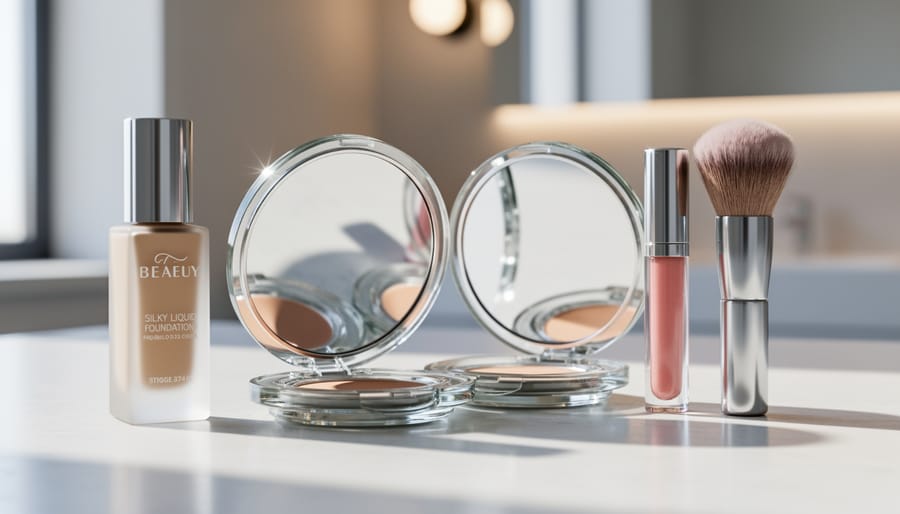
The mineral that makes cosmetics shimmer is mica, a naturally occurring silicate mineral prized for its ability to reflect and refract light. Composed of hydrous silicates of aluminum or potassium, mica forms in thin, flexible sheets that break into fine, light-catching particles perfect for creating that coveted glow in everything from eyeshadows to highlighters.
If you’ve ever wondered why your favorite illuminating powder gives your skin that radiant finish, mica is the answer. This powerhouse ingredient has transformed the beauty industry, making luminous makeup accessible to everyone who wants to add dimension and brightness to their look. Beyond crossword puzzles and ingredient labels, understanding mica means understanding what’s actually touching your skin and how it creates those stunning visual effects we all love.
In this guide, we’re breaking down everything you need to know about mica in cosmetics. You’ll discover how this mineral works its magic at a microscopic level, explore the different types used in beauty products, and learn where you’ll find it in your makeup collection. Whether you’re reading ingredient lists for the first time or you’re a seasoned beauty enthusiast expanding your knowledge, this article gives you the information to make confident choices about the shimmering products you bring into your routine. Together, we’re building a community that celebrates both the science and artistry behind beautiful makeup.
What Is Mica?
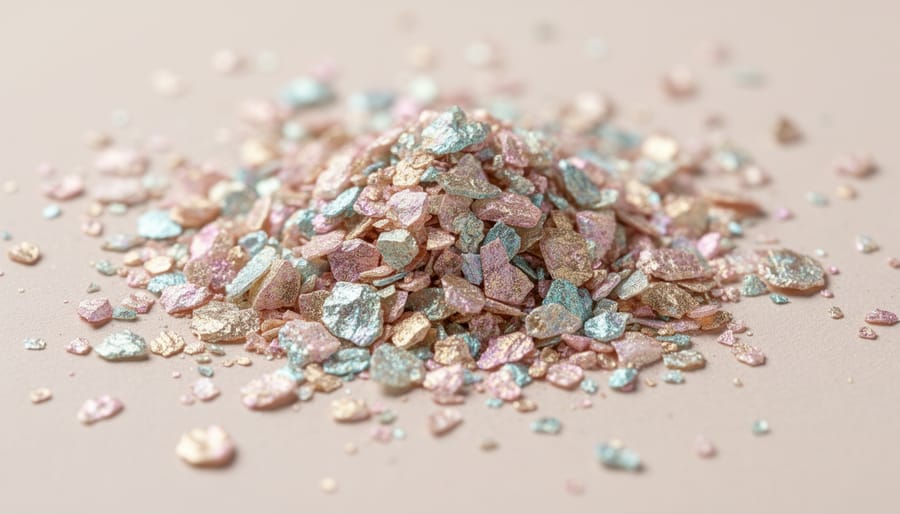
Mica is a group of naturally occurring minerals made up of hydrous silicates of aluminum or potassium. Think of it as nature’s glitter, thin, shimmery layers of rock that catch and reflect light in the most beautiful way. If you’ve ever picked up a stone that sparkled in the sun, chances are you were holding a piece of mica.
These minerals form deep within the earth’s crust under intense heat and pressure, creating their signature layered structure. That structure is what makes mica so special for cosmetics. Each microscopic layer acts like a tiny mirror, bouncing light back at your skin to create that coveted glow. You’ll find mica deposits all over the world, from the mountains of India and Brazil to regions across North America and Africa.
- Hydrous Silicates
- Chemical compounds containing silicon, oxygen, and water that form the basis of mica’s structure. This composition gives mica its unique ability to split into thin, flexible sheets.
- Reflective Properties
- The way mica’s layered structure bounces light back to the eye, creating shimmer and luminosity. These properties make mica irreplaceable in beauty formulations designed to catch the light.
- Natural Mineral
- A substance formed by geological processes rather than created in a lab. Mica occurs naturally in rocks and has been used for thousands of years in various applications.
- Shimmer Effect
- The soft, radiant glow created when light hits reflective particles on the skin. Mica produces this effect more naturally and subtly than many synthetic alternatives.
What makes mica perfect for your makeup bag is how finely it can be ground. When milled into powder, those reflective layers become microscopic particles that blend seamlessly into formulas while maintaining their light-catching magic. The mineral’s natural iridescence ranges from pearly white to golden, pink, or bronze tones, giving cosmetic chemists a gorgeous palette to work with. Unlike chunky glitter that sits on top of your skin, mica integrates into products to create dimension and radiance that looks like it’s coming from within.
How Mica Creates That Signature Shimmer
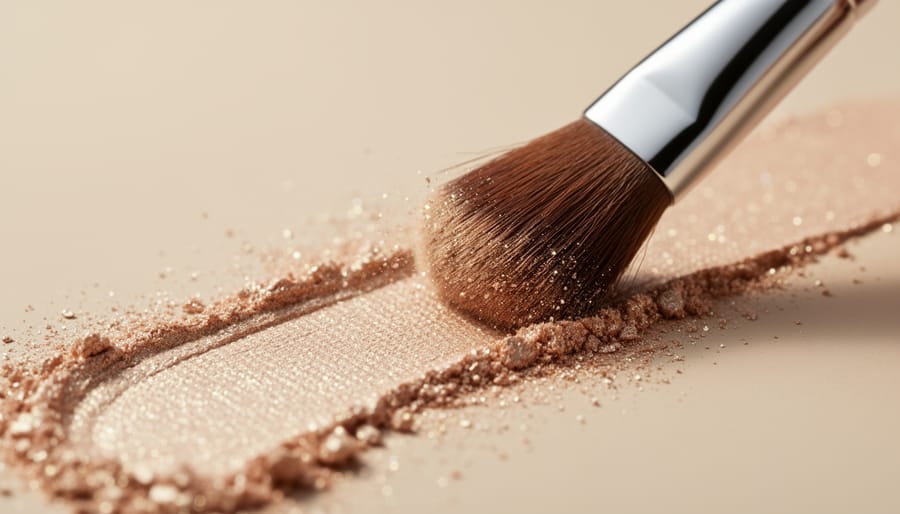
Mica’s shimmer isn’t magic, it’s physics you can see on your cheekbones. This mineral works like millions of tiny mirrors built right into its structure. Each flake consists of stacked layers (think pages in a book), and when light hits these layers, some bounces off the top surface while some penetrates deeper before reflecting back out. That interplay creates the dimensional glow we love, where your highlighter catches light from different angles throughout the day.
The size of mica particles dramatically changes the effect you see in the mirror. Larger particles, around 150 to 250 micrometers, deliver bold, chunky glitter and intense metallic finishes perfect for festival makeup or dramatic evening looks. Smaller particles, typically 10 to 60 micrometers, create that soft-focus glow and subtle luminosity ideal for everyday wear or a natural “lit from within” effect. Beauty brands manipulate particle size deliberately to achieve specific looks, which is why your gentle daytime highlighter feels completely different from that show-stopping liquid metal eyeshadow.
What makes mica particularly special is how it bends (refracts) light in addition to reflecting it. As light travels through those transparent layers, it shifts direction slightly, splitting into different wavelengths. That’s why quality mica-based products don’t just shine, they seem to glow with depth and movement. You’re seeing light interact with multiple layers simultaneously, creating complexity that flat glitter or simple shine can’t match. When cosmetic chemists coat mica with metal oxides like titanium dioxide or iron oxides, they enhance this effect further, producing everything from pearl finishes to vibrant duo-chrome shifts that change color as you move. It’s this versatility that’s made mica the backbone of modern shimmer cosmetics across every price point and product category.
Types of Mica Used in Beauty Products
When you’re scanning ingredient lists for that shimmer magic, you’ll discover that not all mica performs the same job in your makeup bag. The beauty industry relies on several distinct types, each engineered or selected for specific effects ranging from whisper-soft radiance to full-on metallic drama.
Natural mica comes straight from the earth, most commonly a variety called muscovite. This transparent, silvery mineral produces a classic, delicate shimmer that catches light beautifully without overwhelming your features. You’ll spot natural mica in products marketed as subtle or “lit from within” formulas, think everyday eyeshadows, light-diffusing setting powders, and those coveted “no-makeup makeup” highlighters. It gives skin a healthy glow rather than obvious sparkle, making it incredibly versatile across all skin tones.
Synthetic micaparticularly a type called fluorophlogopite, has gained ground in recent years. Labs create this version from scratch, which means manufacturers can control purity and consistency far more precisely than with mined minerals. Synthetic mica typically delivers a cleaner, more uniform shimmer and sidesteps ethical concerns about mining practices. Many premium brands now prefer it for high-end formulations where performance consistency matters most.
Coated mica varieties push shimmer into entirely new territory. By wrapping mica particles in other minerals, cosmetic chemists create effects natural mica simply can’t achieve on its own. Here’s what you’ll encounter:
- Natural muscovite micaClassic silvery shimmer with soft, natural light reflection
- Synthetic fluorophlogopiteLab-created version offering purity, consistency, and ethical sourcing
- Titanium dioxide-coated micaCreates pearl and iridescent color-shifting effects
- Iron oxide-coated micaProduces warm bronze, copper, and rose gold metallic finishes
- Pearl-effect micaMulti-coated particles for intense, almost holographic shimmer
Titanium dioxide-coated mica produces those mesmerizing pearl finishes and color shifts you see in duochrome eyeshadows. Iron oxide coatings deliver warm metallics, think bronze, copper, and rose gold tones that add depth and dimension. When brands boast about “multidimensional” or “3D” shimmer, they’re usually working with these coated variations.
The mica type dictates where a product lands in your routine. Subtle natural mica suits professional daytime looks and mature skin that prefers refinement over flash. Coated varieties shine in editorial makeup, festival looks, and products designed to make a statement. Many foundations and tinted moisturizers contain finely-milled natural mica for an undetectable radiance, while highlighters and metallic liquid eyeshadows pack coated particles for maximum impact.
Where You’ll Find Mica in Your Beauty Routine
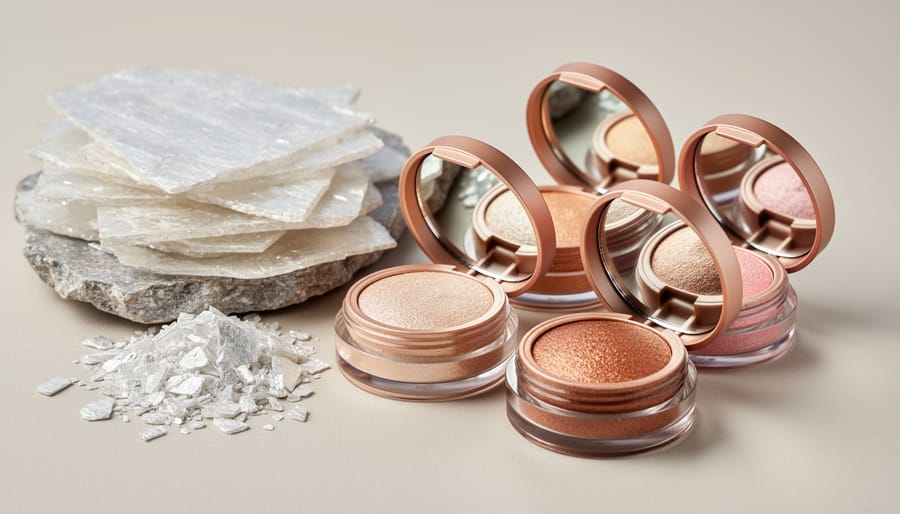
Mica shows up in virtually every corner of your makeup collection, which is why understanding this ingredient helps you make confident choices across your entire routine.
Your eyeshadow palettes are mica’s most famous home. Whether you’re reaching for a soft champagne shimmer or a dramatic metallic bronze, mica creates those light-catching finishes that transform eye looks from flat to dimensional. The mineral’s versatility means it works equally well in pressed powders, cream shadows, and liquid formulas.
Highlighters rely heavily on mica to deliver that coveted glow. From subtle face-illuminating drops to bold strobing powders, mica particles reflect light off your cheekbones, brow bones, and cupid’s bow. You’ll find it in powder highlighters, cream sticks, and liquid illuminators alike.
Lipsticks and glosses use finely milled mica to add shine and dimension. Those gorgeous metallic lip colors? Mica makes them possible. Even nude shades often contain tiny amounts to prevent a completely matte, flat appearance. When shopping for lip-safe beauty products, you’ll notice mica appears frequently because it’s generally well-tolerated and provides that polished finish many of us love.
Foundations and setting powders incorporate mica for a soft-focus effect that blurs imperfections and adds subtle radiance. The light-reflecting properties help skin look smoother and more luminous without obvious glitter or sparkle.
Nail polishes use mica to create shimmer, metallic, and iridescent finishes. From delicate pearl effects to bold holographic looks, mica particles suspended in polish formulas catch light with every hand movement.
Body shimmer products, lotions, oils, and powders designed for shoulders, collarbones, and legs, rely on larger mica particles to create that sun-kissed, glowing effect that photographs beautifully.
Understanding where mica appears empowers you to choose products that align with your preferred finish, whether you’re building a full glam look or keeping things naturally radiant.
Reading Labels: How to Spot Mica in Your Cosmetics
Flip any cosmetic product over and scan the ingredient list, mica appears more often than you might expect. It typically shows up as simply “mica” in the ingredients panel, usually listed within the first half dozen components for shimmer-focused products like highlighters and eyeshadows. The closer it appears to the top of the list, the higher its concentration in the formula.
You might also spot variations like “CI 77019”, which is mica’s Color Index number, or “synthetic fluorphlogopite”, a lab-created mica alternative. Some brands list “titanium dioxide-coated mica” or “iron oxide-coated mica” to indicate the pigment layers that create specific shimmer colors. If you see “sericite”, that’s a type of finely milled mica powder often used for subtle luminosity rather than dramatic sparkle.
The clean beauty movement has pushed many brands toward greater transparency, so you’ll increasingly find detailed sourcing information on packaging or websites. Look for terms like “ethically sourced mica” or “synthetic mica” if supply chain concerns matter to you.
Reading labels becomes second nature once you know what to look for. This knowledge transforms you from passive consumer to informed participant in your beauty choices, letting you select products that align with your values and desired finish. Share what you discover with fellow beauty enthusiasts, ingredient literacy strengthens our entire community.
Questions Beauty Lovers Are Asking About Mica
When you’re navigating the cosmetic ingredient buzz questions about mica come up constantly in our community conversations. Here are the answers beauty lovers need to know.
What is the answer to “Mineral that makes cosmetics shimmer”?
The answer is MICA. This group of minerals, composed of hydrous silicates of aluminum or potassium, is the go-to ingredient for creating shimmer and glow in beauty products.
Is mica safe for all skin types?
Generally, mica is considered safe for most skin types and is non-toxic when used in cosmetic formulations. However, everyone’s skin responds differently, so patch testing new products is always a smart move.
Can mica irritate sensitive skin?
Pure, finely milled mica rarely causes irritation, but some people may react to coatings, dyes, or other ingredients mixed with the mica in a product. If you have reactive skin, look for products labeled for sensitive skin or with minimal additional ingredients.
What’s the difference between mica and other shimmer ingredients?
Mica offers a soft, dimensional shimmer with natural light-reflecting properties, while synthetic alternatives like bismuth oxychloride create more metallic finishes and synthetic pearls give a pearlescent glow. Each produces a distinct effect, so your choice depends on the look you want.
The sourcing question weighs on many conscious consumers’ minds, and it’s worth asking brands about their mica supply chain. Ethical sourcing matters, especially when some mica mining involves exploitative labor practices. Many companies now use synthetic mica or commit to transparency about their sourcing, which aligns with our community’s values of making informed, empowered choices.
Whether you’re hunting for budget beauty tips or splurging on luxury shimmer, understanding mica helps you read labels with confidence. You’ll know exactly what creates that glow you love and can make choices that feel right for your skin, your values, and your beauty vision.
Now you know the secret behind that radiant glow: mica, the mineral powerhouse that’s been transforming ordinary makeup into something magical. From the subtle luminosity in your everyday foundation to the bold sparkle in your favorite party eyeshadow, mica works its light-reflecting magic across your entire beauty collection. Understanding what creates that shimmer empowers you to make choices that align with your values and your skin’s needs.
We’d love to hear from you! What’s your go-to mica-containing product? Have you discovered any favorites that give you that perfect glow? Maybe you’ve got questions about ingredient labels or want to share tips with fellow beauty enthusiasts who are navigating their own shimmer journeys. Drop your thoughts in the comments and let’s keep this conversation going, because beauty knowledge is always better when it’s shared within our community. Your insights and experiences help everyone make more informed, confident choices about the products that make them shine.