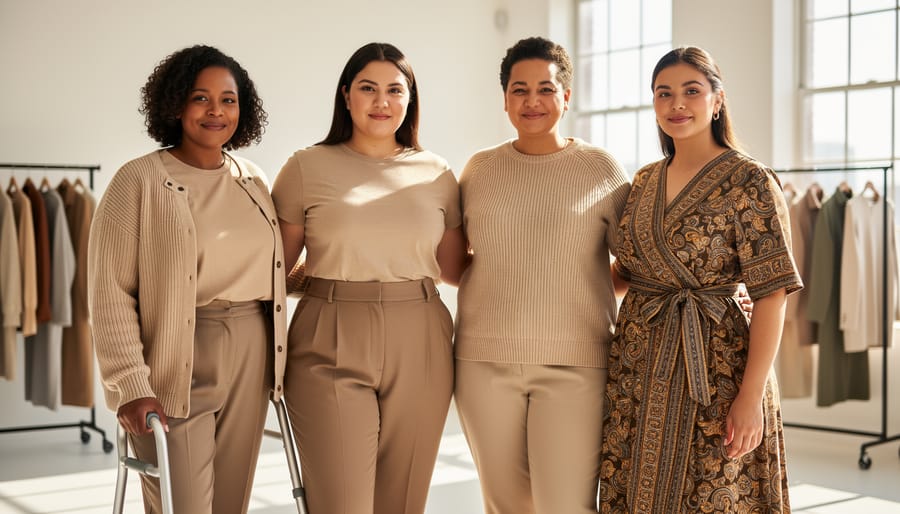
Inclusive fashion transforms the way we dress by centering comfort, adaptability, and representation across all body types, abilities, cultural identities, and personal expressions. Instead of forcing people to conform to arbitrary sizing standards or inaccessible designs, truly inclusive pieces meet you where you are, whether that means adaptive closures for limited dexterity, extended size ranges that go beyond token gestures, or culturally affirming silhouettes that honor diverse traditions. Building an inclusive wardrobe isn’t about charity or niche categories. It’s about recognizing that fashion belongs to everyone and should work for our real lives, not an imagined ideal.
The movement toward inclusive design has gained significant momentum, driven by communities who’ve long been overlooked by mainstream brands. People with disabilities advocated for magnetic closures and seated silhouettes. Plus-size communities demanded proportional grading and quality fabrics across all size runs. Cultural voices pushed for modest options and traditional garments that don’t require special ordering or custom tailoring. What emerged is a richer fashion landscape where adjustable waistbands, sensory-friendly textures, and gender-neutral cuts aren’t afterthoughts but essential features.
This shift requires us to rethink what “essential” means. The twelve pieces that follow aren’t just wardrobe staples. They’re carefully selected building blocks that respect how different bodies move, how various abilities interact with clothing, and how personal and cultural identity shapes our relationship with what we wear. Each item offers specific, tangible benefits that make getting dressed easier, more affirming, and genuinely joyful for more people.
How We Selected These Inclusive Fashion Essentials
Our selection process prioritized real-world usefulness over marketing hype. We consulted fashion enthusiasts across the disability, plus-size, modest fashion, and gender-diverse communities to understand what actually makes a wardrobe essential truly inclusive. Each item earned its spot by meeting multiple criteria that address genuine needs rather than checking boxes for appearance.
We evaluated every piece against these standards:
- Size range spanning at least ten sizes beyond traditional S-XL offerings
- Adaptive features that enhance accessibility without compromising style
- Versatility across different body shapes, abilities, and cultural expressions
- Price accessibility, with options under $100 and easy returns for risk-free trying
- Direct feedback from community members who live with these garments daily
This collaborative approach meant listening to wheelchair users about coat lengths, consulting with hijab-wearing fashion lovers about neckline heights, and learning from neurodivergent individuals about fabric sensitivities. We excluded items that only paid lip service to inclusivity through limited size extensions or token adaptive lines. The result is a curated collection built on lived experience rather than assumptions about what diverse bodies need.
1. Extended-Size Denim in Multiple Fits

Quality denim forms the backbone of any versatile wardrobe, and true inclusivity means finding jeans that actually fit your unique body. Extended-size denim in ranges from 00 to 40+ represents more than numbers on a tag, it acknowledges that bodies exist in beautiful variety and deserve thoughtfully designed clothing.
Look for brands offering multiple inseam lengths (short, regular, long, extra-long) alongside size ranges, because height diversity matters just as much as width. The best inclusive denim comes in distinct fit categories: straight cuts for balanced proportions, curvy fits with extra room through hips and thighs, and relaxed styles that prioritize comfort without sacrificing shape.
Construction details separate authentic inclusive design from simple size expansion. Check for reinforced seams that won’t gap or pull, substantial waistbands that sit comfortably without digging, and strategically placed stretch that moves with you throughout the day. Quality denim blends cotton with 2-3% elastane for recovery and comfort.
Before committing to a brand, research their fit and returns policies, generous return windows let you test multiple sizes at home. Read reviews from people with similar body types, and don’t hesitate to size up or down based on specific measurements rather than your usual number. Great-fitting denim exists for every body; it just takes knowing what to seek.
2. Adaptive Closures and Magnetic Fasteners
Adaptive closures transform getting dressed from a frustrating struggle into a seamless routine. Magnetic fasteners replace traditional buttons with discreet magnets that snap together effortlessly, requiring no fine motor precision. You simply bring the fabric edges close, and the magnets do the work. This design particularly helps people with arthritis, Parkinson’s, stroke recovery challenges, or any condition affecting hand strength and coordination.
Elastic waistbands with hidden adjusters offer another game-changing feature. Unlike visible drawstrings, these incorporate internal mechanisms that let you customize fit without compromising the garment’s clean silhouette. Pull-on pants with these systems work for fluctuating body sizes due to medication, chronic conditions, or simply day-to-day comfort preferences.
Hook-and-loop closures (like Velcro) have evolved beyond their clinical associations. Modern versions use quieter, softer materials positioned inside cuffs or along side seams where they remain invisible. Side-zip pants and tops with extended zipper pulls make dressing possible from a seated position.
These features benefit everyone beyond their intended adaptive function. Parents wrestling with toddlers appreciate one-handed magnetic shirts. Anyone with temporary injuries, post-surgery limitations, or morning stiffness finds relief in easier closures. The best part is that well-designed adaptive clothing looks identical to conventional pieces, proving accessibility and style coexist beautifully.
3. Universal Design Outerwear
Universal design outerwear proves that functional features can enhance style rather than detract from it. These jackets and coats incorporate thoughtful elements like extended back zippers that allow you to zip up while seated, eliminating the awkward reach-behind struggle. Look for designs with adjustable hem drawstrings and side vents that prevent bunching when sitting for extended periods.
Wheelchair users particularly benefit from shorter back lengths paired with longer fronts, which keep your lap covered without creating excess fabric that catches in wheels or mechanisms. Raglan sleeves offer greater range of motion than set-in sleeves, making it easier to reach, lift, and maneuver without restriction.
The best universal design outerwear includes magnetic closures hidden beneath traditional buttons or zippers, giving you the classic look you want with the ease you need. Pit zips and mesh-lined vent systems provide temperature regulation for people who experience difficulty removing layers independently.
Brands leading this space now offer asymmetrical cuts, where one side features different closure placements to accommodate prosthetics or medical devices. Removable hoods with extra-secure snap systems prevent slipping during transfers or movement.
These features aren’t just smart for specific needs. Extended zippers make getting dressed simpler for everyone, and adjustable hems adapt to height differences and layering preferences across all body types.
4. Hijab-Friendly Tops and Layering Pieces
Quality modest fashion pieces honor both personal faith and individual style preferences. High-neck tops, tunics extending past the hip, and thoughtfully designed layering pieces create versatile foundations for hijab-wearers and anyone preferring modest silhouettes.
Look for tops with necklines that sit at or above the collarbone, eliminating the need for constant adjustments or additional underlayers. Three-quarter and full-length sleeves offer coverage while maintaining breathability through fabrics like cotton jersey, modal blends, and lightweight ponte. Tunic lengths that reach mid-thigh or below work beautifully over leggings or wide-leg pants, creating balanced proportions.
Layering pieces deserve special attention. Long cardigans, kimonos, and dusters add dimension without bulk around the neck and shoulders where hijabs naturally create volume. Seek out designs without large collars or excessive detailing at the neckline that can compete with or disrupt head covering placement.
The best modest fashion brands understand that religious or cultural dress choices don’t mean sacrificing contemporary style. Contemporary cuts, rich colors, and interesting textures elevate these pieces beyond basic coverage. Button-front shirts with hidden plackets, side-slit tunics, and asymmetrical hems bring visual interest while maintaining the modesty many wearers prioritize.
These essentials respect diverse expressions of faith and personal comfort boundaries simultaneously.
5. Gender-Neutral Basics

Gender-neutral basics strip away the arbitrary rules of “women’s” and “men’s” sections, opening up wardrobes to anyone who wants clothes that fit their body and style rather than someone else’s assumptions. These pieces typically feature balanced proportions, neither exaggerated hips nor shoulders, with straight or relaxed cuts that work across body types. Think classic crewneck tees in organic cotton, oversized button-downs with dropped shoulders, straight-leg trousers with adjustable waists, and relaxed blazers that layer beautifully without clinging.
The beauty of unisex basics lies in their versatility. A single oversized white shirt becomes a mini dress on one person, a layering piece on another, and a classic shirt-and-jeans combo on someone else. Stick to neutral palettes, black, white, grey, navy, olive, for maximum mixability, but don’t shy away from bold colors if they speak to you. These pieces celebrate personal expression precisely because they don’t come with gendered expectations attached.
When shopping, pay attention to actual measurements rather than S/M/L labels, since sizing varies wildly between brands. Many companies offer free size exchange policies, making it easier to find your perfect fit. Style these staples by adding accessories that reflect your identity: a statement belt, layered jewelry, a bold lip, or your favorite sneakers. The point isn’t androgyny for everyone, it’s freedom to build outfits that feel authentically yours.
6. Footwear with Width and Volume Options
Finding shoes that truly fit can transform your entire relationship with fashion. Proper footwear isn’t just about comfort, it directly impacts posture, joint health, and mobility. Yet standard shoe widths exclude millions of people with narrow, wide, extra-wide, or high-volume feet.
Look for brands offering multiple width options alongside length sizing. Narrow (A/AA) and wide (D/2E) widths accommodate feet that standard B or medium sizes can’t serve. Extra-wide (4E and beyond) options prevent painful compression and bunions. High-volume designs provide toe box depth for conditions like hammertoes or when orthotics are necessary.
Orthotic-friendly construction includes removable insoles, deeper heel cups, and structured arch support. These features benefit anyone with plantar fasciitis, flat feet, or diabetes-related foot concerns. Adjustable straps and laces let you customize the fit as swelling fluctuates throughout the day.
Brands like New Balance, Vionic, and Clarks lead in width diversity, while newer companies such as Atoms and Thursday Boot Company design ground-up for inclusive sizing. Athletic shoes increasingly offer 2E and 4E widths across their ranges.
Check that the brand actually grades the entire shoe, not just the insole, across widths. True width sizing adjusts the upper, toe box, and structural elements proportionally.
7. Textured and Sensory-Friendly Fabrics
Sensory-friendly clothing recognizes that fabric texture directly impacts how comfortable we feel in our clothes. For neurodivergent individuals, people with sensory processing differences, or anyone with skin sensitivities, scratchy tags, rough seams, and stiff materials can transform getting dressed from routine to ordeal.
Look for garments made from bamboo, modal, or pima cotton, fabrics that feel whisper-soft against skin. Seamless construction eliminates irritating ridges that rub throughout the day, while flat-lock stitching provides necessary structure without the bulk. Tagless designs or printed labels replace those annoying neck tags that many of us cut out anyway.
The beauty of sensory-friendly fashion extends beyond accommodation. These thoughtfully designed pieces benefit everyone who values comfort: the person recovering from surgery, someone experiencing skin inflammation, or anyone who prefers clothes they forget they’re wearing. Weighted fabrics like jersey knits can provide calming pressure, while ultra-smooth athletic blends offer gentle stretch without restriction.
Brands now highlight sensory features in product descriptions, making it easier to filter for “soft-touch” or “tag-free” options. This textile diversity transforms wardrobes from tolerable to genuinely enjoyable, proving that what starts as accessibility often becomes everyone’s preference.
8. Adjustable Undergarments and Bralettes

Finding the right foundation garments shouldn’t feel like a treasure hunt, yet countless people struggle to locate bras that actually fit their bodies. True inclusive sizing in undergarments means offering band sizes from 28 to 50+ and cup sizes spanning AA through K cups and beyond, with multiple hook-and-eye positions that accommodate weight fluctuations and personal comfort preferences.
Wireless bralettes have revolutionized intimate apparel by removing uncomfortable underwires while still providing support through strategic seaming, wider bands, and quality elastic. These designs work beautifully for people recovering from chest surgery, those with fibromyalgia or chronic pain conditions, and anyone who finds traditional bra construction restrictive.
Look for adjustable features like convertible straps that can be worn traditional, crossed, or halter-style to accommodate different shoulder widths and outfit needs. Front-closure options eliminate the awkward reach-around that challenges people with limited mobility, while racerback styles distribute weight more evenly across the back.
The best inclusive brands offer sister sizing guidance and accommodate diverse chest shapes, from shallow to projected, from wide-set to close-set. Soft, stretchy materials with tag-free labels and flat seams prevent irritation for sensitive skin. Remember that proper foundation garments should enhance your comfort and confidence, never compromise either.
9. Maternity and Postpartum Transitional Wear
Pregnancy and postpartum bodies deserve clothing that adapts rather than forces you into rigid categories. Maternity and transitional wear now extends far beyond belly panels, embracing adjustable features that serve you through trimesters and beyond.
Look for pieces with drawstring or elastic waistbands that accommodate fluctuating measurements without digging in. Wrap dresses, empire waistlines, and side-ruched tops provide flexibility whether you’re six months pregnant or six weeks postpartum. These aren’t temporary wardrobe fillers, they’re investments in comfort during a transformative time.
Nursing-friendly designs have evolved beyond basic button-downs. Crossover necklines, hidden zippers, and strategically placed snaps offer discreet access while maintaining your style. Some brands integrate lift-up layers or stretchy necklines that don’t require specialized “nursing” labels, making these pieces wearable long after feeding ends.
Stretchy, breathable fabrics like modal blends and jersey knits move with your body rather than restricting it. Choose pieces with reinforced seams at stress points, they’ll withstand repeated wear and washing during this intensive period.
The best transitional pieces don’t announce their purpose. A well-constructed wrap cardigan, an A-line dress with strategic gathering, or high-waisted leggings with a supportive waistband serve you through pregnancy, recovery, and everyday life afterward. Your body’s story deserves clothing that honors each chapter.
10. Prosthetic and Medical Device-Friendly Designs
Living with prosthetics or medical devices shouldn’t mean compromising your personal style. Forward-thinking brands now design clothing with strategically placed pockets, discreet openings, and reinforced panels that accommodate insulin pumps, ostomy bags, port-a-caths, feeding tubes, and prosthetic limbs without sacrificing aesthetics.
Look for jeans and trousers with interior pump pockets positioned at the waistband or upper thigh, keeping devices secure while maintaining easy access for adjustments. Dresses and tops featuring hidden side zippers or wraparound designs allow quick access to ports and bags without needing to fully undress. Many adaptive brands now incorporate strong magnetic closures near device sites, eliminating fumbling with buttons during time-sensitive situations.
For prosthetic users, seek pants with reinforced inner thighs that withstand friction, and tops with sleeve designs that accommodate varying limb lengths and socket shapes. Compression-friendly fabrics prevent bunching around devices while maintaining a polished silhouette.
The beauty of medical device-friendly fashion lies in its universal appeal. Features designed for accessibility often enhance convenience for everyone, proving that thoughtful design elevates the entire fashion community. These garments restore autonomy and confidence, allowing you to focus on expressing your authentic self rather than managing wardrobe workarounds.
11. Multi-Tone Nude Essentials
For decades, “nude” in fashion meant a single peachy-beige tone that matched maybe ten percent of the population. True inclusivity requires undergarments, hosiery, and shapewear available in a spectrum that honors every skin tone, from porcelain and ivory through warm ochres, rich caramels, deep browns, and the darkest ebony shades.
When your bra or tights actually match your skin, the garment disappears under clothing instead of showing through as an awkward mismatch. This isn’t cosmetic; it’s functional design that respects diversity. Brands like Nubian Skin, Savage X Fenty, and Heist have expanded the nude category to include 10-20+ shades, finally acknowledging that one beige doesn’t fit all.
Look for brands offering descriptive shade names tied to actual skin tones rather than food comparisons, and check whether they provide swatches or matching guides. For those with sensitive skin many expanded-nude lines also prioritize hypoallergenic materials and minimal dye processing.
Finding your true nude transforms how foundation pieces work in your wardrobe. It’s representation you can wear daily, and it signals that you’re seen, valued, and designed for, not an afterthought in fashion’s color palette.
12. Easy-Care, Low-Maintenance Fabrics

Easy-care fabrics transform fashion from a chore into a joy, especially for folks managing chronic pain, fatigue, limited mobility, or packed schedules. Wrinkle-resistant blends like performance cotton-polyester, technical knits, and treated rayon maintain their shape and smooth appearance straight from the dryer, eliminating the need for ironing or steaming that can be physically demanding or time-consuming.
Machine-washable materials, including many modern wools, sturdy linens, and synthetic blends, remove barriers that dry-cleaning creates. No need to transport garments to specialty cleaners or handle harsh chemicals. Toss them in with your regular laundry and move on with your day.
Stain-resistant treatments and colorfast dyes add another layer of accessibility. Spills happen, and fabrics that release stains easily or don’t require delicate spot-treatment reduce stress and physical effort. This matters tremendously for people with tremors, vision challenges, or conditions that make detailed garment care exhausting.
Quick-dry fabrics deserve mention too. Materials that air-dry rapidly or emerge from the dryer ready to wear mean fewer wardrobe pieces needed overall and less energy spent managing laundry cycles. Performance fabrics aren’t just for athletes, they’re wardrobe workhorses that respect your time, energy, and physical limitations while keeping you looking polished.
Building Your Inclusive Wardrobe: Where Community Meets Style
Building your inclusive wardrobe isn’t a solo journey. The 12 essentials we’ve covered offer practical starting points, but the real magic happens when we share discoveries, swap styling hacks, and champion brands that genuinely prioritize accessibility. Inclusive fashion thrives on lived experience, the wheelchair user who knows which outerwear actually works for seated silhouettes, the parent navigating nursing-friendly layers, the person with sensory needs who’s found the perfect seamless tee. Your insights matter because they help someone else feel seen, comfortable, and confident.
Choice, representation, and empowerment aren’t buzzwords. They’re the foundation of a wardrobe that works for your actual life, body, and identity. Whether you’re building from scratch or rethinking what you already own, remember that inclusive fashion rejects one-size-fits-all thinking. It invites you to mix adaptive features with bold prints, pair sensory-friendly fabrics with statement accessories, and define style on your own terms. The conversation doesn’t end here, it expands every time we demand better, celebrate innovation, and remind the industry that fashion belongs to everyone.
Frequently Asked Questions
Where can I find truly inclusive sizing beyond vanity-labeled numbers?
Look for brands that publish actual garment measurements (bust, waist, hip, inseam) alongside numerical sizes, and check if they offer at least 15+ sizes with consistent grading between each. Read reviews from people with body types similar to yours to verify fit claims.
How do I know if adaptive features will work for my specific needs?
Many inclusive brands now offer detailed product videos showing closures in action and how garments accommodate mobility aids or medical devices. Reach out to customer service with specific questions about your requirements, responsive brands will provide clear answers about functionality.
Is inclusive fashion more expensive than conventional clothing?
Not necessarily. While some specialized adaptive designs carry premium prices due to smaller production runs, many inclusive brands price competitively with mainstream retailers, and the improved fit and longevity often deliver better cost-per-wear value.
Can I mix inclusive pieces with my existing wardrobe?
Absolutely. These essentials are designed to integrate seamlessly with conventional clothing, a pair of extended-size jeans works with any top you already own, and gender-neutral basics layer beautifully with statement pieces from your current collection.
Building an inclusive wardrobe doesn’t require tossing everything you already love. Start with one or two essentials that address your biggest fit frustrations, then gradually add pieces as you discover what works best for your body, lifestyle, and personal expression. Share your finds with the Nova Fashion community so others can benefit from your discoveries.